
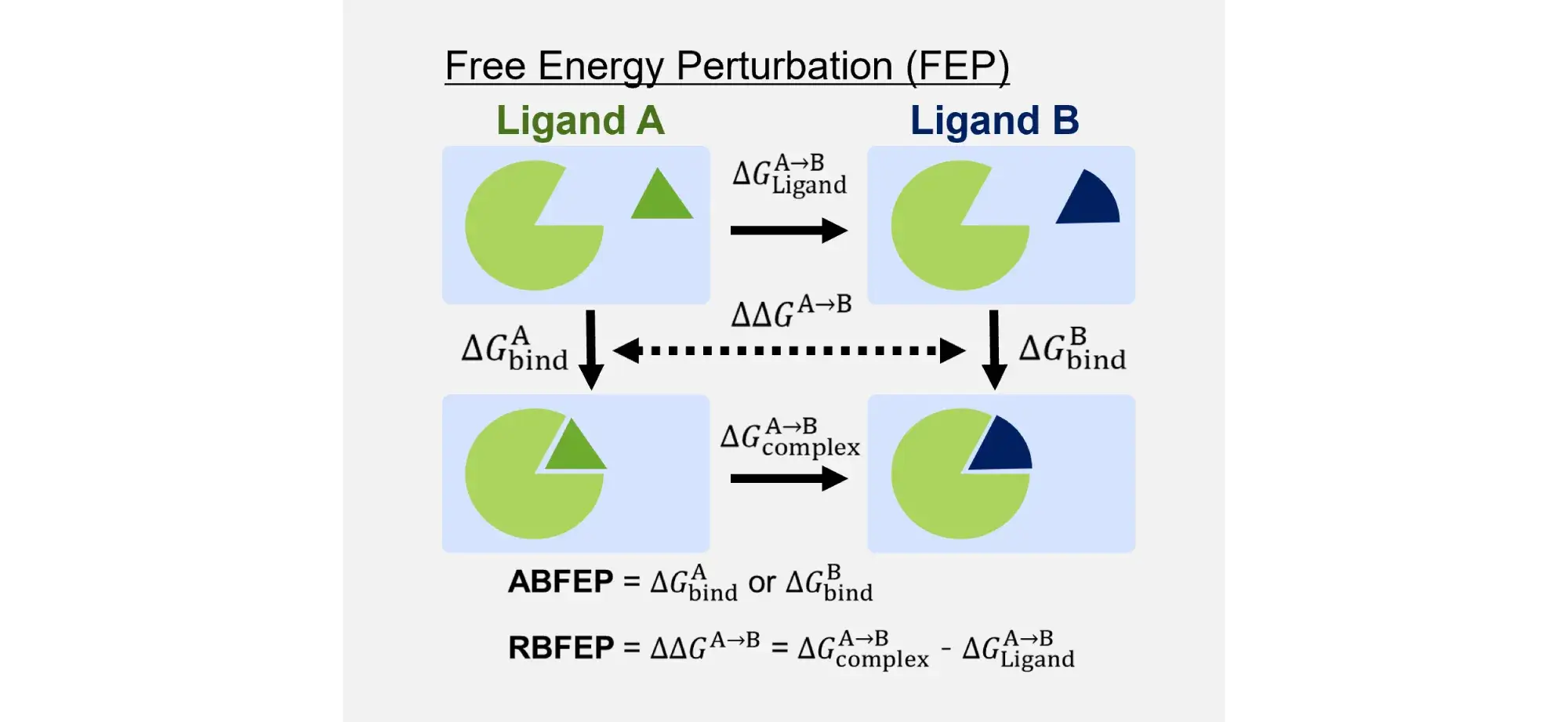
Free Energy Perturbation (FEP)
About Free Energy Perturbation (FEP)
- Free Energy Perturbation (FEP) is a statistical mechanics-based method for calculating the free energy changes associated with ligand-protein binding and is one means of predicting activity with high accuracy.
- Two related methods exist: Absolute Binding FEP (ABFEP) and Relative Binding FEP (RBFEP).
- Although FEP can provide highly accurate predictions, its high computational cost is an issue because it requires the calculation of many intermediate states.
| Absolute Binding FEP(ABFEP) | Relative Binding FEP(RBFEP) | |
|---|---|---|
| Characteristics | Direct calculation of the free energy change in process of ligand in solution binding to target protein. | Calculation of difference in binding free energy when two different ligands bind to the same protein. |
| Scope of Use | Can calculate individual ligands. Can use for a set of ligands with diverse structures. |
Compares similar ligands (not individual compounds). Suitable for lead optimization around a fixed scaffold. |
| Prediction Accuracy | Relatively high (lower than RBFEP) | High |
| Computation Time | Long | Relatively long (shorter than ABFEP) |
| Computation Cost | High | Relatively high (lower than ABFEP) |
| Xeureka Development |
Xeureka AFEP/ Xeureka RFEP available on Tokyo-1 | |
Software in use on Tokyo-1 by major pharma companies.
- Simple installation enables large-scale ABFEP calculations in the Tokyo-1 environment.
- Site license, rather than license fees based on the scale of calculations,making it easy to perform large-scale calculations at a reasonable cost.
- We are constantly improving the functionality based on feedback from partners using the system.
Available for contract analysis by Xeureka using Tokyo-1 computing resources
- Perform ABFEP calculations on behalf of customers using Xeureka’s large-scale computational resources upon request.
- Potential applications: binding pose validation, Virtual Screening rescoring, scaffold hopping, and more.
Use Cases of AFEP
Example Use Cases of AFEP
Hit ID
- Enhanced hit enrichment in virtual screening
Hit to Lead
- Enhanced potency through significant structural modifications
- Identification of novel chemotypes via scaffold hopping to establish multiple scaffold series
Lead optimization
- Multi-parameter optimization of compounds integrating ADMET prediction and AI-driven molecular generation
- Generation of backup series using alternative scaffolds to mitigate scaffold-related safety risks
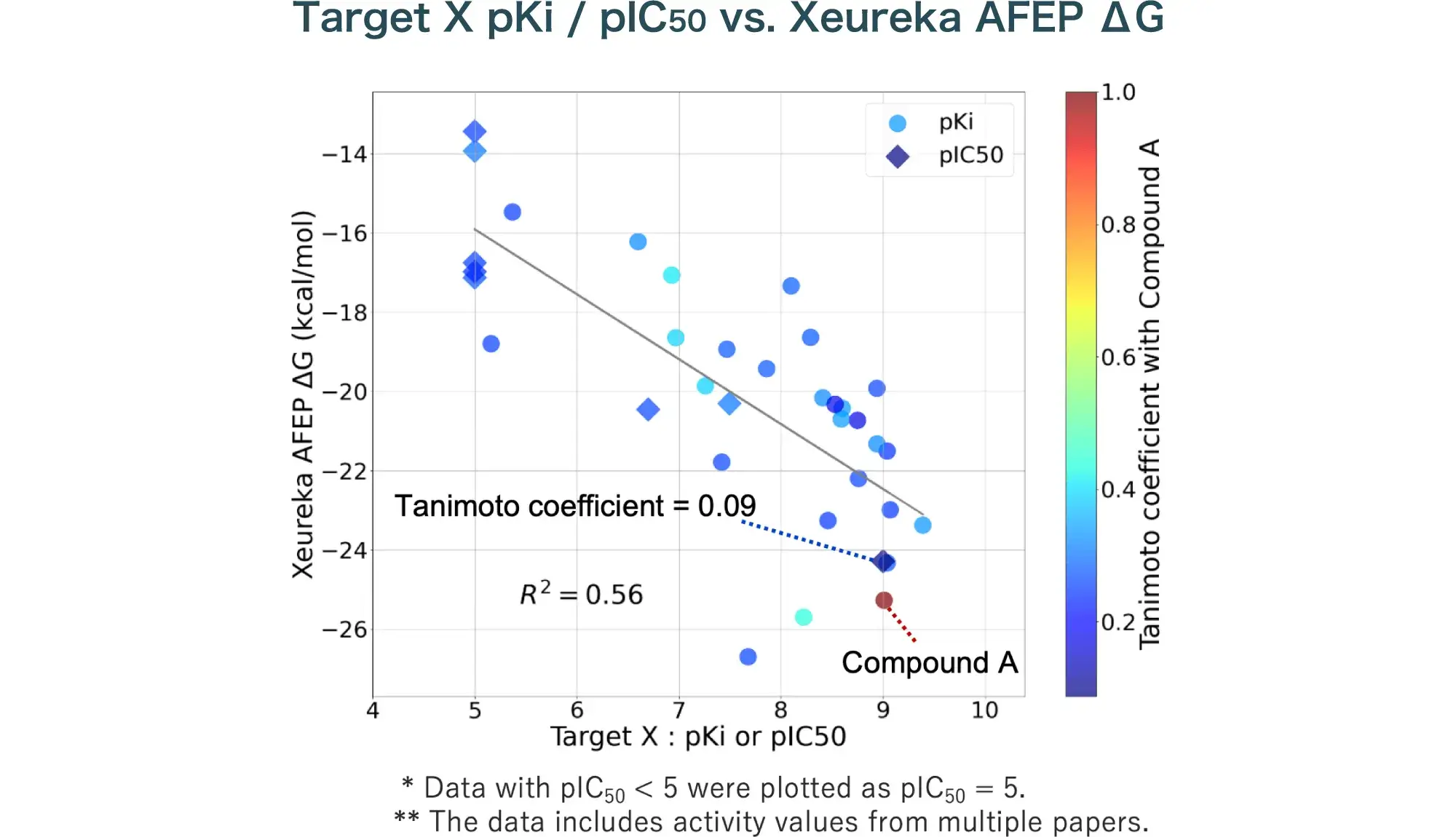
Scaffold Hopping Using Xeureka AFEP
- Based on the complex structure of clinical compound A with Target X, Xeureka AFEP successfully predicted the activities of known compounds across different chemotypes with high accuracy.
- These results demonstrate that Xeureka AFEP is a powerful tool for scaffold hopping.
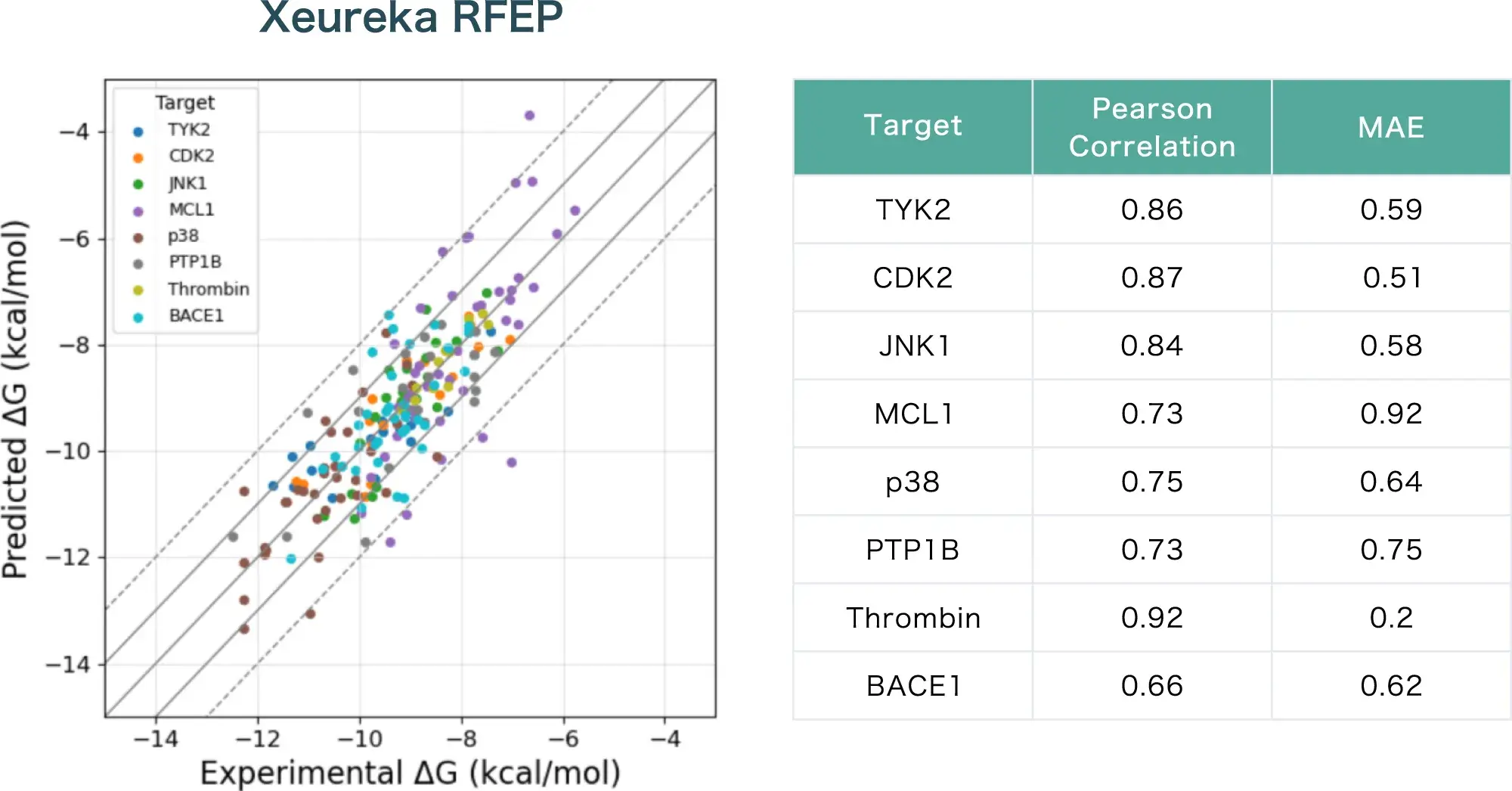
Xeureka AFEP/RFEP : accuracy evaluation
- Validation of the predictive accuracy of Xeureka AFEP and RFEP using data from benchmark studies*
- High predictive accuracy was achieved, at a level suitable for use in drug discovery
* Wei Chen, et al. J. Chem. Inf. Model. 2023, 63, 3171-3185
Accuracy of Xeureka AFEP
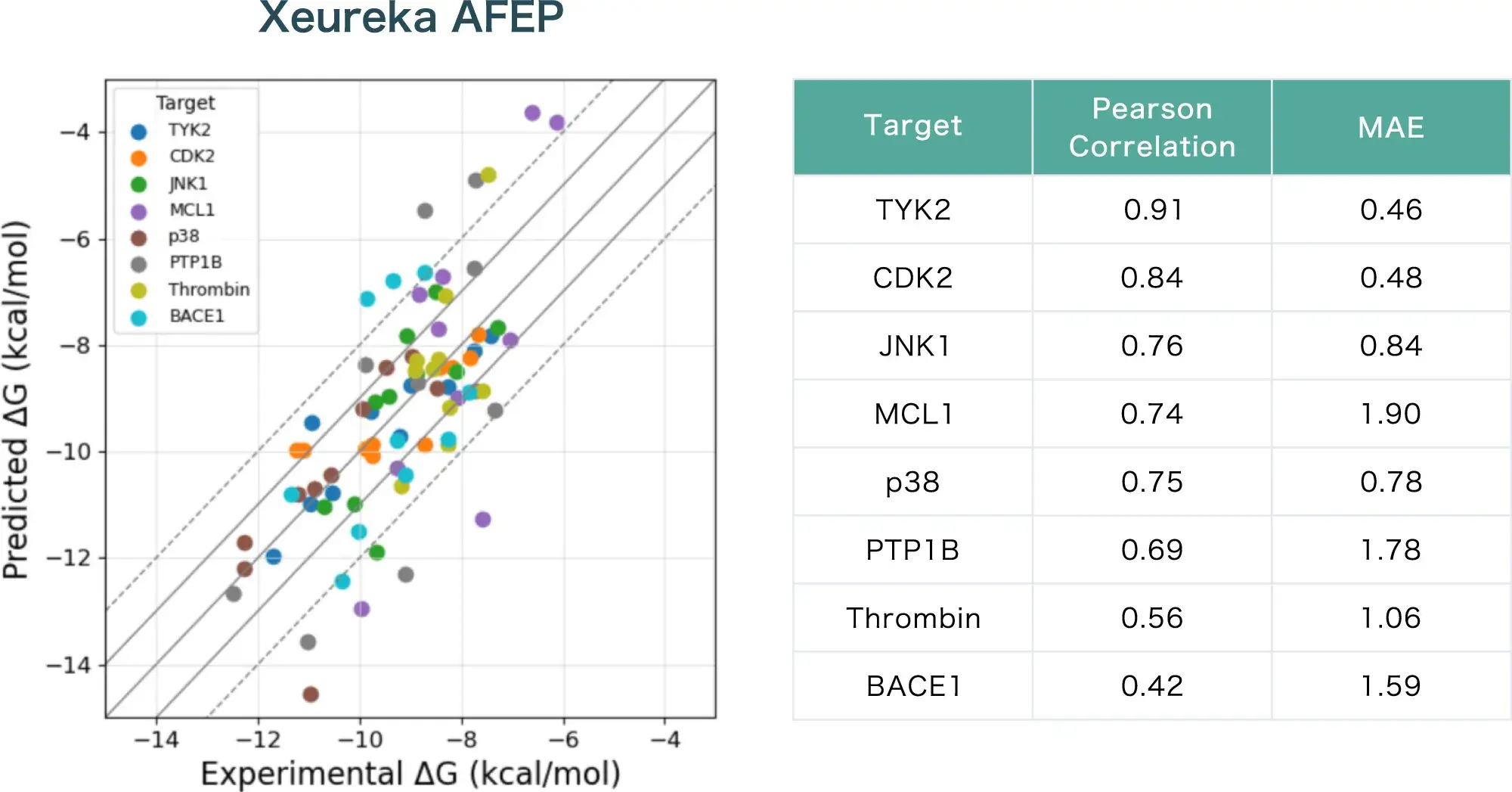
From a literature* benchmark study, 10 ligands were selected for each of 8 targets, and ABFEP calculations conducted
Accuracy of Xeureka RFEP